The Ultimate Police Scanner Guide (2026): Frequencies, Apps, Laws & Choosing the Right Scanner
Short answer: most US counties still run analog on at least some public safety channels, while a growing number have moved to encrypted or digital P25 systems that no scanner can receive at any price. Check your county before you buy. Listening needs no FCC license.
The Ultimate Police Scanner Guide (2026)
Everything you need to know about police scanners, frequencies, scanner apps, digital radio systems, and choosing the right scanner for your area.
Whether you're buying your first police scanner, replacing an older model, or trying to find out if your local police department can still be monitored, you've come to the right place.
This guide answers virtually every question people ask before purchasing a scanner, including:
- How do police scanners work?
- Are police scanners still legal?
- Can police scanners hear encrypted communications?
- What's the difference between analog and digital scanners?
- Do scanner apps work?
- What scanner should I buy?
- How do I find local police frequencies?
- Can I listen without internet?
- Which scanner works in my county?
Looking for a scanner that's ready to use?
At PoliceRadio.org we professionally program every compatible scanner before it ships. Simply choose your county during checkout and your scanner arrives ready to listen right out of the box.
No complicated software.
No confusing programming.
No subscription required.
Table of Contents
What Is a Police Scanner?
A police scanner is a specialized radio receiver designed to monitor public radio communications used by police departments, sheriff's offices, fire departments, EMS agencies, public works, aviation, railroads, weather services, and many other organizations.
Unlike a standard AM/FM radio that only receives commercial broadcasts, a police scanner rapidly checks hundreds—or even thousands—of radio channels every second. When it detects an active transmission, it automatically stops so you can hear the conversation before continuing to scan for additional activity.
Modern scanners are capable of monitoring multiple radio technologies, including traditional analog channels and advanced digital public safety systems used throughout the United States.
Depending on where you live, a scanner may allow you to monitor:
- Police dispatch
- Sheriff dispatch
- Fire departments
- EMS and ambulance traffic
- CHP and state police (where applicable)
- Search & Rescue
- Aircraft communications
- NOAA Weather Radio
- Marine communications
- Railroad traffic
- Public utilities
- Emergency management
Important
Not every public safety agency can still be monitored. Many departments across the United States have switched to encrypted communications, making their radio traffic unavailable to any scanner. Later in this guide we'll explain how to determine whether your local agencies are monitorable before purchasing a scanner.
Despite the growth of smartphone apps and internet audio feeds, dedicated police scanners remain the preferred choice for hobbyists, volunteer responders, storm spotters, neighborhood watch members, news professionals, and anyone who wants immediate, reliable access to local radio communications without relying on an internet connection.
Editor’s Pick

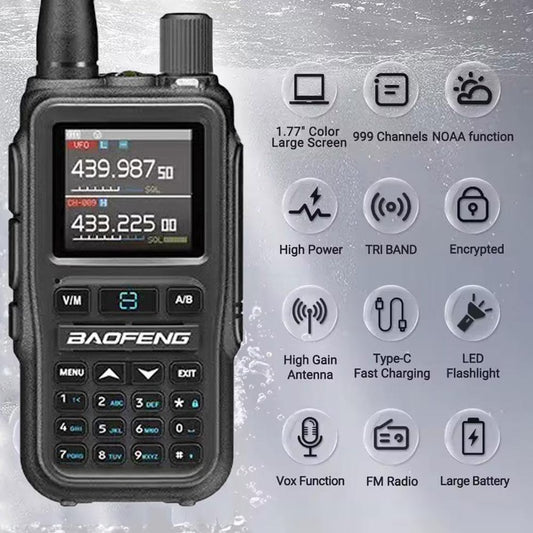
Baofeng UV-5R Mini
Our favorite everyday pick — tiny, dual-band, pre-programmed to your zip code.
$59.95
Shop Now →

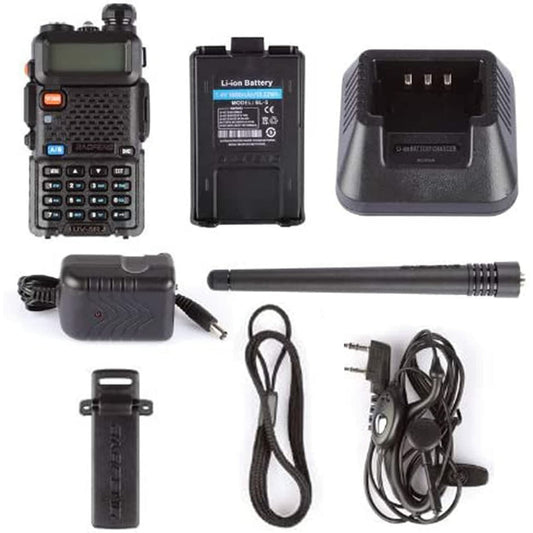
Baofeng UV-5R (Black)
The classic entry point — reliable dual-band scanning at the best price.
$59.50
Shop Now →

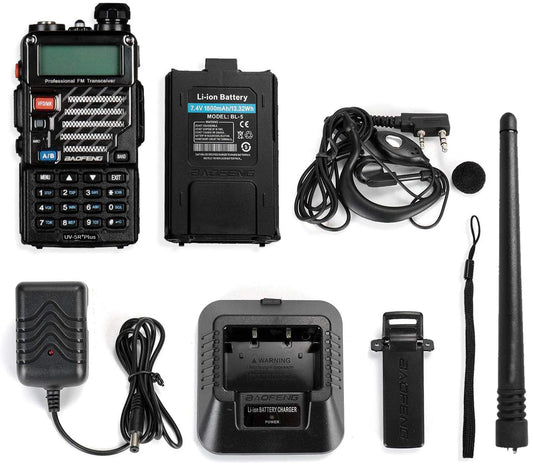
Baofeng UV-5R Plus
More memory, more features — the value pick with extra headroom.
$65.49
Shop Now →

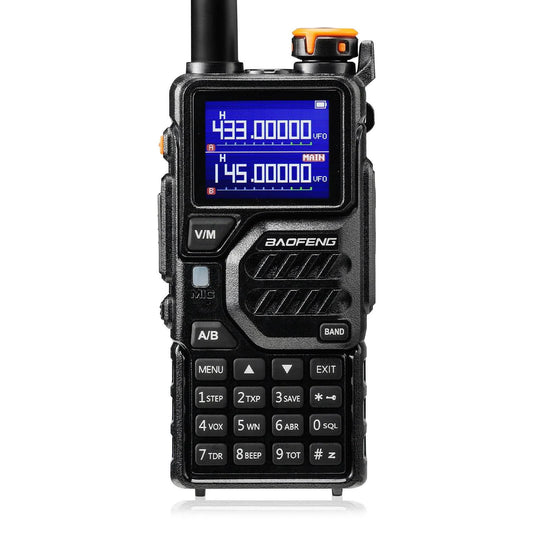
Baofeng K5 Plus Tri-Band
Tri-band coverage and 128 channels for serious listeners.
$116.50
Shop Now →
-
✓ Free US shipping
-
✓ Programmed to your ZIP
-
✓ Lifetime support
-
✓ 30-day returns
Analog vs Digital Police Scanners: Choosing the Right Scanner for Your Area
Baofeng UV-5R Mini
Our favorite everyday pick — tiny, dual-band, pre-programmed to your zip code.
Baofeng UV-5R (Black)
The classic entry point — reliable dual-band scanning at the best price.
Baofeng UV-5R Plus
More memory, more features — the value pick with extra headroom.
Baofeng K5 Plus Tri-Band
Tri-band coverage and 128 channels for serious listeners.
- ✓ Free US shipping
- ✓ Programmed to your ZIP
- ✓ Lifetime support
- ✓ 30-day returns
One of the biggest mistakes people make when buying a police scanner is assuming that the most expensive scanner is automatically the best choice.
The truth is much simpler: The best police scanner is the one that matches the radio systems used in your area.
Some communities still rely heavily on analog radio systems, while others have moved to advanced digital networks. Choosing the right technology can save you hundreds of dollars while ensuring you can actually hear the agencies you care about.
You don't always need the most expensive scanner
If your local police, fire, EMS, or public service agencies still use analog communications, an affordable analog scanner may provide everything you need.
Paying for advanced digital features that your area does not use can mean spending more money without receiving any additional benefit.
What Is an Analog Police Scanner?
An analog police scanner receives traditional radio transmissions where audio is transmitted as a continuous signal. This technology has been used by public safety agencies for decades and remains active in many areas today.
While many large metropolitan areas have transitioned to digital systems, thousands of smaller communities, rural agencies, volunteer fire departments, businesses, transportation organizations, and public service groups still use analog radio communications.
Why Analog Scanners Are Still a Great Choice
Analog scanners continue to be popular because they offer excellent value, simplicity, and reliability when used in the right environment.
- Lower cost: Analog scanners are often significantly less expensive than advanced digital models.
- Simple operation: Many users prefer the straightforward setup and operation of analog scanners.
- Excellent value: You can monitor active agencies without paying for features you do not need.
- Long battery life: Many analog models use less processing power compared to advanced digital scanners.
- Great for rural areas: Many smaller communities continue to use analog systems.
- Perfect for hobbyists: Analog scanners are excellent for monitoring fire departments, weather, aviation, railroads, businesses, and other services.
Who Should Consider an Analog Scanner?
An analog scanner may be the perfect choice if you:
- Live in an area with analog public safety communications
- Want an affordable scanner for local monitoring
- Are new to the scanner hobby
- Want to monitor fire, EMS, weather, aviation, or other services
- Do not need advanced digital features
- Prefer a simple and reliable scanner
The smartest scanner purchase is an informed purchase
Before spending hundreds of dollars on a digital scanner, check what radio technology your local agencies actually use.
A properly programmed analog scanner can outperform an expensive digital scanner for your specific needs if your area uses analog communications.
What Is a Digital Police Scanner?
Digital scanners are designed to decode modern radio systems where voice communications are converted into digital information before transmission.
Many cities, counties, and large public safety agencies use digital systems because they can provide improved coverage, advanced features, and more efficient use of radio frequencies.
Advantages of Digital Scanners
- Can monitor modern digital radio systems
- Supports P25 digital communications
- Can follow many trunked radio systems
- Provides coverage for more advanced networks
- Better choice for many large metropolitan areas
When Should You Buy a Digital Scanner?
A digital scanner may be the right choice if:
- Your local agencies use P25 digital radio systems
- You live in a major city or county
- You want the widest possible agency coverage
- You plan to travel and monitor different areas
- You need compatibility with newer radio networks
Analog vs Digital Scanner Comparison
| Feature | Analog Scanner | Digital Scanner |
|---|---|---|
| Cost | Lower purchase price | Higher purchase price |
| Ease of Use | Generally simpler | More advanced setup |
| Best For | Analog areas, beginners, budget buyers | Digital and complex radio systems |
| Technology | Traditional radio signals | Digital voice communications |
| Future Compatibility | Depends on local systems | Supports more modern systems |
How PoliceRadio.org Helps You Choose
Choosing the wrong scanner can be frustrating. You should not have to spend hours researching frequencies, radio systems, and programming software just to listen to your local agencies.
At PoliceRadio.org, our goal is simple: Help you get the right scanner for your area.
We provide scanners that are programmed for the intended service area, helping customers avoid complicated setup and confusion after purchase.
In the next section, we'll explain another important technology used in modern scanner systems: trunked radio systems, why they are different from traditional frequencies, and why some scanners can follow them while others cannot.
Trunked Radio Systems Explained: What Scanner Owners Need to Know
One of the biggest changes in public safety communications over the last few decades has been the move from traditional radio channels to trunked radio systems.
Understanding trunking is important because it explains why some scanners can monitor hundreds of agencies while older scanners may only receive a limited number of channels.
However, trunking does not automatically mean you need the most expensive scanner available. The right scanner depends on the system used in your specific area.
The simple explanation:
A traditional radio system assigns users to specific frequencies. A trunked radio system shares a group of frequencies between many users and automatically assigns available channels as needed.
Think of it like a highway:
- A conventional system is like each driver having their own dedicated lane.
- A trunked system is like all drivers sharing multiple lanes that are managed automatically.
How Conventional Radio Systems Work
In a conventional radio system, an agency typically uses specific frequencies for specific purposes.
For example:
- Police Dispatch → Channel 1
- Fire Dispatch → Channel 2
- Public Works → Channel 3
Your scanner simply monitors those programmed frequencies and stops when it detects activity.
Many smaller communities and rural agencies still use conventional systems because they are reliable, affordable, and effective for their needs.
How Trunked Radio Systems Work
A trunked system works differently. Instead of assigning one permanent frequency to each department, multiple agencies share a group of frequencies controlled by a system controller.
When someone transmits, the system automatically assigns an available frequency and tells compatible radios where to go.
Your scanner must understand these instructions in order to follow the conversation.
Why Older Scanners May Not Work on Trunked Systems
A traditional analog scanner may receive individual frequencies, but it cannot follow the communication process used by many trunked systems.
This can result in:
- Hearing only fragments of conversations
- Missing replies from officers or dispatchers
- Hearing random channels instead of complete conversations
- Missing important talk groups
This is why choosing the correct scanner matters
Before purchasing a scanner, it is important to know what type of radio system your area uses.
A properly matched analog scanner can be an excellent choice in an analog area. A trunking-capable scanner may be necessary in areas using modern trunked systems.
Types of Trunked Radio Systems
There are several different trunking technologies used throughout the United States.
| System Type | Description | Common Use |
|---|---|---|
| Conventional | Dedicated frequencies assigned to users | Smaller agencies, businesses, rural areas |
| Trunked | Shared frequencies managed by a controller | Large agencies and regional systems |
| P25 Trunked | Digital trunking standard used by many public safety agencies | Police, fire, EMS, government |
Do You Need a Trunking Scanner?
Not everyone needs a trunking scanner.
A trunking-capable scanner may be a good choice if:
- Your county uses a trunked radio system
- You live near a major metropolitan area
- You want to monitor multiple agencies on a shared system
- You travel and want broader compatibility
A conventional analog scanner may be the better choice if:
- Your local agencies use analog channels
- You mainly want local monitoring
- You want a lower-cost scanner
- You do not need advanced digital features
Why Professional Programming Makes a Difference
Modern scanner systems can be complicated. A scanner may require the correct frequencies, system settings, talk groups, and location information to perform properly.
Many scanner owners become frustrated because they purchase a capable scanner but do not know how to configure it correctly.
A professionally programmed scanner removes much of that confusion by preparing the device for the intended listening area before it arrives.
The next section explains two other radio technologies that often confuse new scanner buyers: DMR and NXDN, and whether you actually need support for them.
DMR and NXDN Explained: Do You Need These Scanner Features?
When researching police scanners, you may come across terms like DMR and NXDN. These technologies can be confusing for new scanner buyers, especially because they are often listed as advanced scanner features.
The important thing to understand is that DMR and NXDN are not required for every scanner user. Whether you need them depends entirely on the types of radio systems used by the agencies and organizations you want to monitor.
The simple answer:
DMR and NXDN are specialized digital formats used by some organizations.
Many police, fire, and emergency systems use standard public safety radio technologies instead, while DMR and NXDN are often found in businesses, transportation, utilities, schools, and other organizations.
What Is DMR?
DMR stands for Digital Mobile Radio. It is a digital communication standard commonly used by businesses, organizations, and some public safety agencies.
DMR systems can provide clear digital audio, efficient use of radio channels, and features such as individual calling and group communication.
DMR may be used by:
- Businesses
- Security companies
- Transportation companies
- Construction companies
- Utilities
- Some government organizations
What Is NXDN?
NXDN is another digital radio format used by various organizations that need efficient and reliable communication.
NXDN may be found in:
- Railroads
- Utilities
- Businesses
- Industrial operations
- Some public agencies
Do Police Scanner Buyers Need DMR or NXDN?
For many people looking to monitor local police, fire, and emergency communications, DMR and NXDN support may not be necessary.
The most important step is determining what radio systems are actually used in your area.
| If You Want To Monitor | Common Technology |
|---|---|
| Local analog police/fire | Analog conventional systems |
| Many modern public safety agencies | P25 digital systems |
| Businesses and organizations | DMR or NXDN may be used |
| Railroads | Often NXDN or other specialized systems |
Why Scanner Features Matter
Scanner manufacturers add advanced features because different users have different needs. A hobbyist monitoring local fire calls may need a completely different scanner than someone monitoring multiple agencies across several counties.
The best approach is always:
- Determine what agencies you want to monitor.
- Check what radio technology they use.
- Choose a scanner that supports those systems.
Don't pay for features you don't need
A scanner with every available feature is not always the best scanner for every person.
For many listeners, a properly programmed scanner that matches their local area provides a better experience than a more expensive device with features they never use.
Now that you understand analog, digital, trunked systems, DMR, and NXDN, the next question most buyers ask is:
Are Police Scanner Apps Better Than Real Police Scanners?
In the next section, we compare smartphone scanner apps with dedicated scanners and explain the advantages and limitations of each option.
Police Scanner Apps vs Real Police Scanners: Which One Is Better?
One of the most common questions people ask before buying a police scanner is: "Why buy a scanner when I can just use a free app on my phone?"
Police scanner apps are a convenient way to listen to public safety communications, but they are not the same as owning a dedicated scanner. Understanding the differences can help you decide which option is right for your needs.
The short answer:
Scanner apps are convenient. Real scanners provide direct radio reception and more control.
The best choice depends on how seriously you want to monitor local communications and what agencies you want to hear.
How Police Scanner Apps Work
Most police scanner apps do not receive radio signals directly from nearby towers. Instead, they typically connect to online audio feeds provided through the internet.
A scanner owner or organization receives radio transmissions, sends the audio feed online, and the app allows users to listen through their phone or computer.
This makes apps easy to access, but it also means you are dependent on available online feeds and internet connectivity.
Advantages of Police Scanner Apps
- Affordable: Many scanner apps are free or inexpensive.
- Easy to use: Download an app and start listening without buying equipment.
- Good for casual listening: Apps can be useful for checking major incidents or popular channels.
- Portable: Your phone is something you already carry.
Limitations of Police Scanner Apps
- Requires internet: Apps depend on cellular data or Wi-Fi.
- Limited coverage: You can only hear agencies that have available online feeds.
- Possible delays: Online streams may be delayed compared to receiving radio traffic directly.
- No control over feeds: You are limited to what the feed provider chooses to share.
- Feeds can change: Online streams may stop or change availability.
How Real Police Scanners Work
A dedicated police scanner receives radio transmissions directly through an antenna. Instead of relying on an internet stream, the scanner monitors compatible frequencies and radio systems in your area.
This gives scanner owners more control over what they monitor and how their scanner is configured.
Advantages of Owning a Real Police Scanner
- No internet required: A scanner can operate without Wi-Fi or cellular service.
- Direct reception: Receive compatible radio transmissions directly.
- More control: Choose which channels and agencies you want to monitor.
- Better local coverage: Monitor agencies that may not have public online feeds.
- Emergency preparedness: Useful during storms, fires, outages, and other situations where communication matters.
Police Scanner App vs Real Scanner Comparison
| Feature | Scanner App | Real Scanner |
|---|---|---|
| Internet required | Yes | No |
| Receives radio signals directly | No | Yes |
| Works during internet outages | No | Yes |
| Agency availability | Depends on available feeds | Depends on scanner compatibility |
| Setup | Very simple | Requires programming |
| Best for | Casual listening | Dedicated monitoring |
Who Should Buy a Real Police Scanner?
A dedicated scanner may be the better choice if you:
- Want to monitor your local police, fire, or EMS agencies
- Want faster access to local radio traffic
- Live in an area without reliable app coverage
- Enjoy emergency preparedness
- Monitor severe weather or local emergencies
- Want a scanner programmed specifically for your area
Choosing the Right Scanner Still Matters
A real scanner is only useful if it matches the radio systems used in your area.
Some areas use traditional analog channels, while others use digital or trunked systems. Choosing the correct scanner technology is the key to getting the best experience.
This is why researching your local radio system before purchasing is important. A properly matched scanner will provide a much better experience than buying a device that is not compatible with your area.
Choosing between a scanner app and a dedicated scanner comes down to how you plan to use it. For casual listening, an app may be enough. For reliable local monitoring, emergency preparedness, and having more control over what you hear, a dedicated scanner is the better choice.
The next step is choosing a scanner that matches your needs, budget, and the radio systems used in your area.
How To Choose The Right Police Scanner
Choosing a police scanner does not have to be complicated. The best scanner is not always the most expensive model — it is the scanner that matches your location, your listening goals, and your budget.
Many new scanner owners make the mistake of buying a scanner based only on features or price. A better approach is to first understand what you want to monitor and what type of radio system is used in your area.
The right scanner is the one that works for you
If your local agencies use analog communications, an affordable analog scanner can provide an excellent listening experience without paying for advanced features you may never use.
Step 1: Determine What You Want To Monitor
Before choosing a scanner, think about what you actually want to listen to.
- Police: Local law enforcement communications where available.
- Fire and EMS: Emergency response, dispatch, and incident traffic.
- Weather: Severe weather alerts and emergency information.
- Public services: Utilities, transportation, and other local communications.
- Hobby listening: Exploring radio communications in your area.
Step 2: Match Your Scanner To Your Area
The most important factor when choosing a scanner is compatibility.
Different areas use different radio technologies. Some communities still use analog systems, while others have moved to digital or trunked networks.
If your area uses analog communications, an analog scanner may be all you need.
This can provide several advantages:
- Lower purchase cost
- Simple operation
- Reliable performance
- Great option for beginners
- No need to pay for features you will not use
Why Choose an Analog Scanner?
Analog scanners remain popular because they offer excellent value when matched with the right radio system.
For many users, the goal is simple: listen to local communications without spending hundreds of dollars on advanced equipment.
- Affordable: Get started with scanning without a large investment.
- Practical: Monitor compatible local agencies and services.
- Beginner-friendly: Easier to understand compared to advanced digital systems.
- Portable: Take your scanner with you wherever you go.
- Versatile: Many models can also be used for amateur radio and other compatible communications.
Don't overpay for technology you don't need
A common mistake is buying an advanced digital scanner before checking what systems are actually used locally.
If your area can be monitored with an analog scanner, choosing an affordable analog model can be the smarter decision.
How Much Should You Spend On A Police Scanner?
Police scanners are available at many different price points. The right budget depends on your needs and the technology required in your area.
| Budget | Best For |
|---|---|
| Entry Level | Beginners, analog monitoring, local listening |
| Mid Range | More features and broader compatibility |
| Advanced | Complex digital and trunked systems |
For many first-time scanner owners, an affordable analog scanner is the perfect way to start. It allows you to learn how scanning works without making a large investment.
Why Pre-Programmed Scanners Are Worth It
One of the biggest frustrations for new scanner owners is programming.
Even a good scanner can be difficult to use if it is not configured correctly. Entering frequencies, organizing channels, and setting up the radio can take hours for someone who is unfamiliar with scanner software.
A pre-programmed scanner helps simplify the process by arriving ready for the intended listening area.
- Spend less time setting up your scanner
- Avoid common programming mistakes
- Start listening faster
- Get a scanner prepared for your area
Portable Scanner vs Desktop Scanner
Another choice buyers face is whether they want a portable handheld scanner or a larger desktop/base scanner.
| Type | Best For |
|---|---|
| Handheld Scanner | Portability, travel, everyday monitoring |
| Desktop Scanner | Home use, stronger antennas, extended listening |
For many beginners and casual listeners, a handheld analog scanner provides the best combination of affordability, portability, and ease of use.
Once you understand what you want to monitor and what technology your area uses, choosing the right scanner becomes much easier.
Find The Right Police Scanner For Your Needs
Choosing a police scanner does not have to be overwhelming. The best scanner is not always the most expensive one — it is the one that matches your location, your listening goals, and the radio systems used in your area.
Some listeners need advanced digital scanners for complex radio systems. Others simply need an affordable analog scanner that provides reliable local monitoring without unnecessary features or extra cost.
Understanding the difference between analog, digital, trunked, and specialty radio systems helps you make a smarter purchase and avoid spending money on technology you do not need.
The goal is simple:
Get the scanner that works for your area, arrives ready to use, and lets you start listening without the frustration of complicated setup.
Why Choose A Pre-Programmed Scanner?
Many new scanner owners struggle with programming software, frequency lists, and complicated radio settings. A scanner that is not configured correctly can be frustrating, even if it is a quality device.
A pre-programmed scanner saves time by preparing the radio for the intended listening area before it arrives.
- Ready to use out of the box
- Configured for your intended area
- Less time spent troubleshooting
- Better experience for beginners
Start Listening Today
Whether you are interested in local police, fire, EMS, weather, emergency preparedness, or the scanner hobby, choosing the right equipment is the first step.
Browse our selection of pre-programmed scanners and find a radio designed for your needs.
Have questions about which scanner is right for your area? Contact us and we will help you find the right option.
Where can I buy a police scanner? You can buy police scanners online and at many electronics and communications retailers. For a scanner that is ready to use the day it arrives, PoliceRadio.org sells handheld scanners that are pre-programmed to your ZIP code before shipping — so the local police, fire, EMS, and weather channels for your area are already loaded. Browse our pre-programmed police scanners →
Latest Scanner News
Real-time public safety radio updates from PoliceRadio.org
- Aug 15, 2026 Scanner Listeners Help Rescue 3 Kidnapped Kids in Harris County
- Aug 15, 2026 Skagit County Police Radio: Partial Encryption, Dispatch Still Open
- Aug 11, 2026 Polk County Sheriff Releases K-9 Shooting Dispatch Audio
- Aug 11, 2026 Boone County 911 Plans P25 Encryption: Columbia MO Scanners Go Dark
More places we cover
Scanners We Program For Your Area
-
Baofeng UV-5R Plus Police Scanner – Black or Blue, Programmed to Your Zip Code
Regular price $65.49 USDRegular priceUnit price per -
Baofeng UV-5R Mini Police Scanner – Custom Programmed to Your Zip Code
Regular price $59.95 USDRegular priceUnit price per -
Baofeng K5 Plus Tri-Band Police Scanner – Custom Programmed, 128 Channels
Regular price $116.50 USDRegular priceUnit price per -
Baofeng UV-5R Police Scanner (Black) – Programmed to Your Zip Code
Regular price $59.50 USDRegular priceUnit price per